Kesaria Stupa, Bihar: History, How to Reach & Travel Guide
Plan your visit to Kesaria Stupa
Kesaria Stupa fits a Bihar trip best when you give it time, rather than squeezing it between a long drive and a fixed evening commitment. Its archaeological remains reward a slow look, while its Buddhist associations make it meaningful for pilgrims as well as heritage travellers. This guide separates the site's history from religious tradition and explains how to plan transport, combine it with Vaishali and prepare for a family visit.
Where is Kesaria Stupa?
Kesaria Stupa, also written as Kesariya Stupa, is at Kesariya in East Champaran district, Bihar. Bihar Tourism gives its location as Kesariya, East Champaran, Bihar 845424.[1] Use the monument's full name when arranging transport, not simply “Champaran,” which could leave your intended destination unclear.
For Patna-based travellers, plan the outing around the exact pickup point, the return journey and how much sightseeing your group wants. An airport arrival, city-hotel departure and a start from Vaishali are different journeys; a generic distance figure cannot substitute for checking the actual route.
Why is Kesaria Stupa famous?
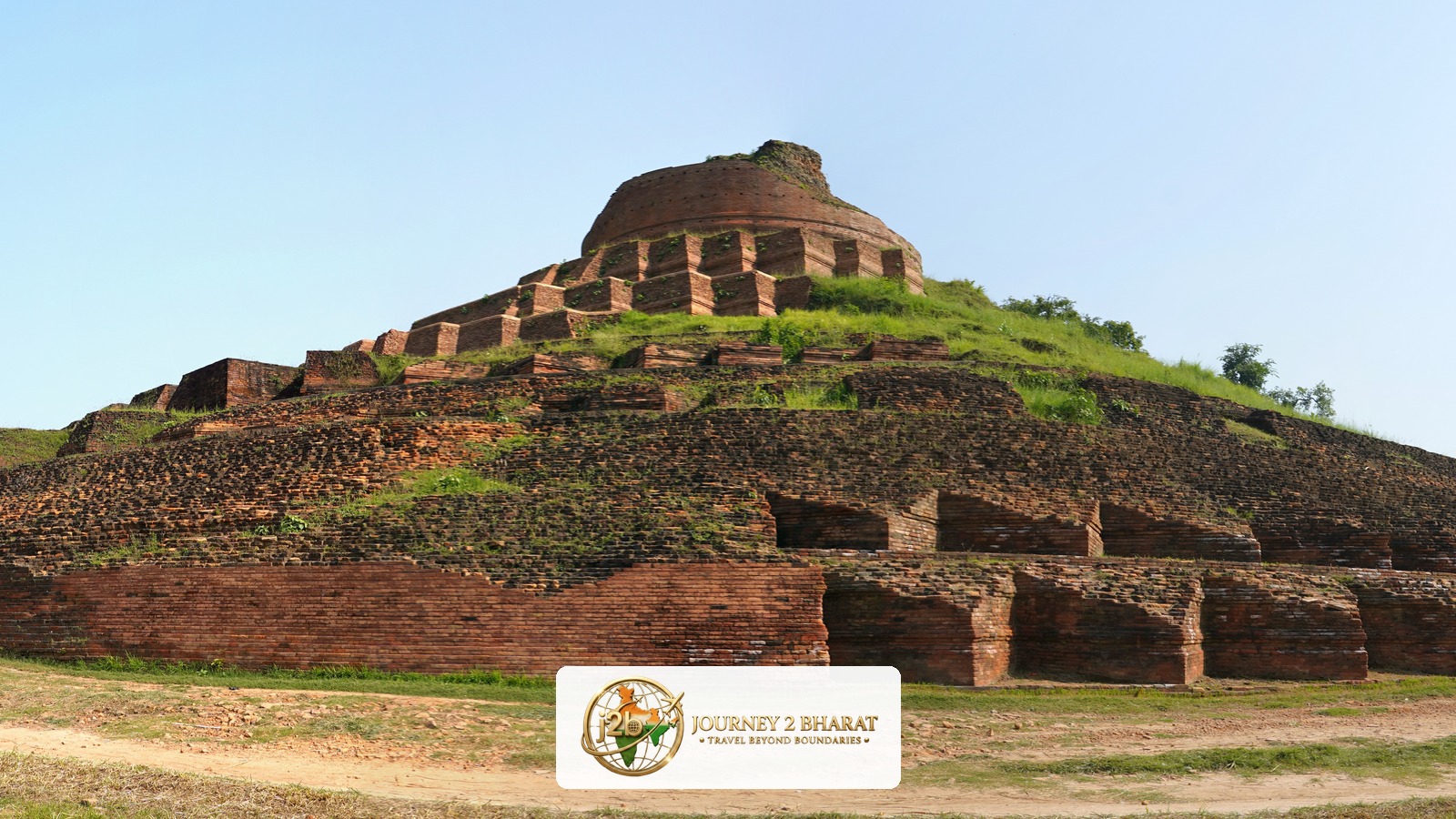
Its appeal is the combination of monumental scale, surviving stepped architecture and Buddhist heritage. ASI Patna Circle includes the Buddhist stupa at Tajpur Deur, Kesariya, among its centrally protected monuments and describes large terraces with Buddha images.[4]
You may see “world's largest” or “world's tallest” in tourism descriptions. Those rankings depend on what is being compared. This guide does not present a universal ranking or a precise height as a settled fact: understanding the structure is more useful than arriving only to tick off a superlative.
History and Buddhist significance
What the archaeology tells us
ASI Patna Circle places the site's chronology from the Sunga–Kushana period through the late Gupta period.[4] That is a span of archaeological history, not a single verified construction date for everything visible today.
Bihar Tourism and the district administration identify ASI excavations in 1998 as an important stage in revealing the monument; Bihar Tourism also notes earlier exploration in the nineteenth century.[1][2] “Excavated in 1998” therefore should not be understood as “completely unknown before 1998.”
What belongs to religious tradition
The East Champaran district account associates Kesaria with the Buddha's final journey and the tradition that he gave his alms bowl to the Licchavis before they returned to Vaishali.[2] ASI's description likewise presents the connection with his final journey as a belief.[4]
For Buddhist pilgrims, that association gives the site spiritual meaning. It should still be distinguished from excavated evidence: the religious narrative is not, by itself, proof of the surviving structure's construction date. Families can use this distinction to discuss how a place can carry both devotional memory and an archaeological history.
Architecture: what to look for during your visit
Look first at the relationship between the terraces, then at the details visible from permitted paths. The district describes circumambulatory passages, Buddha figures including earth-touching poses, and discoveries of decorated bricks, lamps and pottery.[2] These are reported archaeological finds, not a promise that every object is currently displayed for visitors.
ASI and Bihar Tourism describe the structure's levels differently, so this guide avoids giving a definitive terrace count.[1][4] Instead, notice the stepped profile, changes of shape and surviving images where visible. Read the interpretation boards before assigning a purpose or date to an individual feature.
Do not climb the brickwork to get a wider photograph. Bihar Tourism specifically advises visitors to avoid touching or climbing the structures and to maintain cleanliness.[1] Stay within the currently permitted areas even if an older photograph shows someone elsewhere.
How to reach Kesaria Stupa from Patna
For families and travellers who want control over stops, discuss a return car or cab arrangement from Patna. Ask for the proposed road route, an assessment of travel time on your date, waiting arrangements and a clear list of what the transport quote includes.
Official distance descriptions are not consistent: the district page itself gives different Patna figures in its introduction and road-distance section.[2] Rather than selecting one as a guaranteed hotel-to-gate distance, check your starting address and route before booking. This guide does not promise a fixed driving duration.
If using public transport, verify the day's connections and the final leg before setting out. Bihar Tourism lists buses and private vehicles from Motihari or Muzaffarpur; the district identifies Chakia as a railway access point.[1][2] These references do not confirm a direct Patna service, a particular departure or a waiting return vehicle.
Travellers spending time in the city can use our Patna sightseeing guide to plan a separate city day rather than adding several urban stops to the return journey.
Planning Vaishali to Kesaria
The district's road-distance section lists Vaishali at approximately 55 kilometres from Kesaria.[2] Treat that as a published orientation figure, not a live measurement between your exact sightseeing stops.
Read our places to visit in Vaishali guide before choosing which attractions matter most. A focused Vaishali visit and an unhurried Kesaria stop need different planning from trying to include every museum and monument.
Ask your organiser to assess the combined route against confirmed opening hours, sightseeing time, meal breaks and the return drive. Without that check, we do not recommend assuming both destinations will fit comfortably into one Patna-based day.
Best time to visit Kesaria Stupa
Bihar Tourism's destination page recommends September to April, while its Ready Reckoner gives October to March.[1][5] October to March is therefore a useful planning window within the broader published season, subject to your travel date and local conditions.
Check the forecast before leaving. Carry sun protection and water for the journey; in wet conditions, ask about the approach and permitted walking areas. Choose a pace that suits your group rather than treating a recommended month as a guarantee of comfortable weather or unrestricted access.
Timings, entry information and visitor tips
Official information reviewed on 27 October 2026:
- Published visiting hours: Bihar Tourism's Ready Reckoner lists 9:00 AM–4:00 PM for Kesaria Stupa in its attraction-specific information directory, on printed page 31.[5] This is a published schedule, not a live gate-status bulletin; reconfirm opening and last entry before travelling.
- Admission: ASI Patna Circle currently lists the Buddhist Stupa, Tajpur Deur (Kesariya), as non-ticketed.[3] This describes monument admission, not a promise that transport or other services are free.
- Photography and conduct: Bihar Tourism permits phones and cameras in its destination guidance, alongside instructions to protect the archaeological remains.[1] Follow on-site restrictions and ask separately about drones or professional filming.
Do not confuse the Tourism Department's weekday office hours in a website footer with monument timings. For an overnight journey or a visit built around Kesaria alone, reconfirm the current access arrangements before making non-refundable bookings.
Families and senior travellers
Keep the visit flexible. Wear secure footwear, carry necessary medication and agree on a meeting point. Encourage children to observe shapes and images without touching or climbing remains.
Before booking for someone with limited mobility, ask specifically about the entrance-to-viewpoint walk, surfaces, seating and assistance. We have not independently confirmed a step-free route, wheelchair provision or the current condition of toilets. These checks should shape the plan, not become assumptions based on a photograph.
Suggested Patna–Vaishali–Kesaria itinerary
A relaxed two-day option—not a fixed operating schedule:
Day 1: Patna to Vaishali. Choose a manageable sightseeing programme and leave time for lunch and rest. Arrange an overnight location only after checking accommodation, onward routing and your group's needs; no particular property is assumed to be available.
Day 2: Kesaria and the return journey. Plan the transfer around reconfirmed monument hours, explore the permitted areas, and retain a flexible return buffer. Do not attach a tight flight or train connection to an unverified road schedule.
For travellers who prefer to keep a Patna base, separate-day outings are another option to discuss. A combined same-day trip should be proposed only after the actual route and sightseeing allowances have been checked.
If your interest is a longer Buddhist circuit, use our Bodhgaya attractions guide for a separate extension—not another stop to squeeze into the Vaishali–Kesaria day.
Frequently asked questions
Are Kesaria Stupa and Kesariya Stupa the same place?
Yes. The district administration uses Kesaria, while Bihar Tourism uses Kesariya for this East Champaran monument.[1][2]
Is Kesaria Stupa ticketed?
ASI Patna Circle lists it as non-ticketed.[3] Check current arrangements before departure and distinguish admission from any separately arranged services.
Can I climb the stupa?
Do not plan a climbing activity. Bihar Tourism asks visitors not to climb or touch the structures.[1] Use the permitted paths and viewpoints.
Can Vaishali and Kesaria be visited in one day from Patna?
Do not assume so without checking the route, opening hours and your group's pace. The two-day outline above offers more flexibility; separate-day visits may suit families better.
Plan a customized Bihar trip with Journey2Bharat
If you want help combining Patna, Vaishali and Kesaria, explore our Bihar travel packages and request a route built around your interests rather than a rushed checklist.
Send Journey2Bharat a customized trip enquiry with your travel dates, pickup point, group size, preferred pace and any mobility requirements. Ask for written confirmation of the itinerary, transport, accommodation, inclusions and exclusions before booking. No package price, pickup availability or guaranteed attraction access is implied by this suggested guide.
Research sources
- Bihar Tourism — Kesariya Stupa
- East Champaran District — Kesaria Baudh Stup
- ASI Patna Circle — Ticketed and Non-ticketed Monuments
- ASI Patna Circle — Centrally Protected Monuments, item 15
- Bihar Tourism — Ready Reckoner, printed pp. 30–31 (PDF pp. 32–33)
Featured photo: Amitabha Gupta / Wikimedia Commons, CC BY 4.0. Cropped and resized; original Journey2Bharat website logo added. No photographer endorsement implied. Logo trademark rights are separate.